European Roulette review
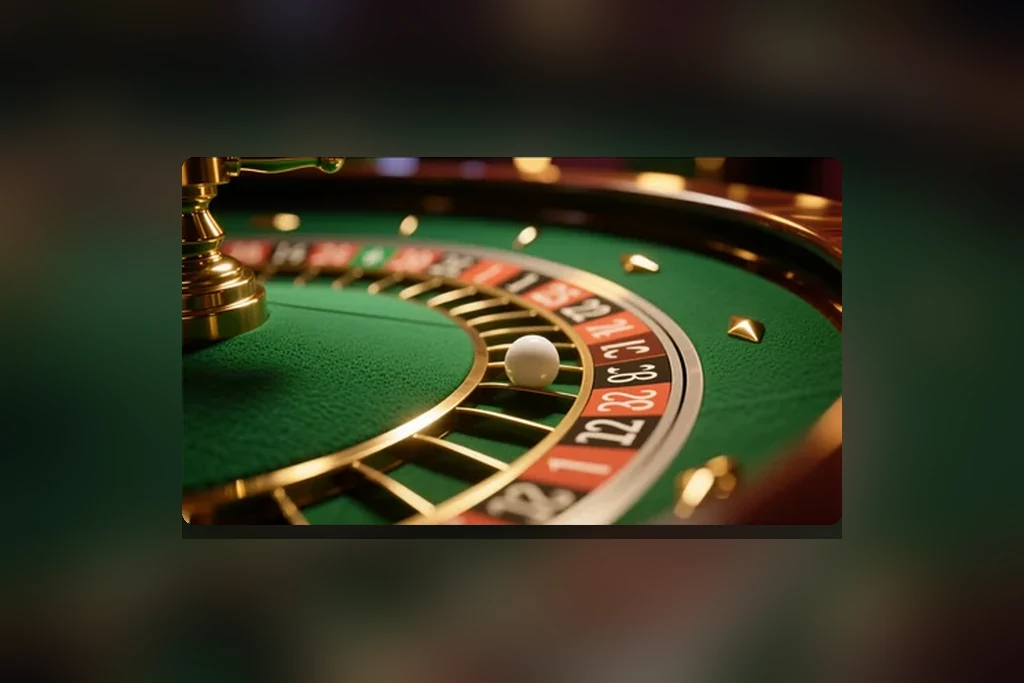
European Roulette is the single-zero version of the wheel, and that missing pocket is the whole argument for it: thirty-seven sectors instead of thirty-eight gives the house a smaller edge than the double-zero layout. Everything else is the game you already know — chips on a felt, a ball, and a result nobody can influence.
What European Roulette is
Evoplay's take on the classic wheel, built around a single zero and the standard betting grid. The numbers run around the rim in the usual order, the outside zones sit where you expect them, and straights, splits, streets and corners can each be covered with a click. Because there is only one zero, every even-money bet loses to a single pocket rather than to two, which is the difference that matters over a long session. There are no side bets, no multipliers and no bonus round to dilute the arithmetic.
Who it suits
For a player who wants the plainest wheel available and no theme to distract from it, this is the natural choice. The single zero also appeals to anyone who has compared layouts and decided that the plainest wheel is the fairest trade. It will disappoint a player who wants lightning rounds, side bets or a jackpot attached to the spin, because the game offers none of those things.
How a spin resolves
You choose chips and place them on the felt while the betting phase is open, however many separate positions you like. The wheel is released, the ball travels against the direction of the rim, and both slow until the ball drops into a pocket. The winning number is marked, stakes on other positions are swept away, and the winning positions are paid at their published rates. Then the layout clears for the next spin, with no carry-over from the one that just ended.
What you actually decide
Only the shape of your bet: which positions to cover and how much each carries. There is no hit-or-stand, no doubling decision and no timing question, because the wheel does the rest. That narrowness is the appeal and the trap at once, since the single decision available is also the one people change most often out of frustration.
Rules and payouts on a single-zero wheel
Inside bets sit on the numbers themselves: a straight covers one pocket, a split two, a street three and a corner four, with returns falling as coverage grows. Outside bets cover larger areas at lower rates, and the even-money options split the wheel nearly in half. Zero is a pocket like any other for a straight bet, but it also takes every even-money outside stake when it lands, which is why the single zero still costs you something.
| Element | What it does | What to check |
|---|---|---|
| The single zero | One pocket that pays on its own bet and sweeps even-money stakes | The exposure of your outside chips on every spin |
| Inside positions | Straights, splits, streets and corners on the numbers | How many pockets one chip is actually covering |
| Outside positions | Dozens, columns, red or black, odd or even | The minimum chip for each zone of the felt |
| Payout schedule | The published return for every position on the layout | The rates printed in the game, not the ones you assume |
| Betting phase | The window in which the layout accepts chips | That a late chip is refused rather than carried over |
The difference between this wheel and the American one is smaller than it looks on any single spin and larger than it looks over a thousand of them, because the edge compounds quietly. Two zeroes mean a slightly worse price on every bet you place, not a dramatic one. If a table offers both layouts, the single-zero version is the better trade for identical stakes and identical decisions.
Stake, pace and volatility with one zero
Nothing about a single zero lowers variance; it only improves the price. A straight number still produces long gaps, an even-money bet still produces clusters of wins and losses, and the wheel has no memory of either. What the digital format adds is pace under your control, so a session can be twenty spins or two hundred depending on how fast you press. Fixing the chip value and the number of spins is the practical way to keep that pace from quietly doubling the amount at risk.
- Choose the chip value before the first spin and keep it fixed.
- Cover one zone rather than scattering chips across the felt.
- Remember a zero hit clears every even-money outside stake.
- Count your spins so the speed of the session stays visible.
- Stop at a set number of spins instead of at a target balance.
Demo play and the first real session on the wheel
The free version uses the same wheel, the same payouts and the same random generator, so practice here is real practice rather than a preview. Use it to learn where each bet sits on the felt, because a misplaced chip is the most expensive mistake available and it is entirely avoidable. Then take a real table with the same chip value you used in the free game, so the only new variable is the money rather than the layout.
- Place every bet type once in free play before staking anything.
- Check that the payouts you were shown match the felt labels.
- Open the real table at the lowest chip the game accepts.
- Play a fixed number of spins and count them as you go.
Where European Roulette sits in the 7Slots lobby
In the 7Slots table games section this is the reference wheel: the one to compare everything else against, and the one to open when you want roulette without a presenter, a timer or a chat window. It works well as a short block inside a longer session, since spins are quick and the rules never need re-reading. Anyone who wants the social version of the same arithmetic will find the live rooms a few clicks away, with the same single zero and a dealer in place of the button.
European Roulette offers one improvement over its American cousin and no way to beat it: a single zero instead of two. Stake flat, cover one area, and count spins rather than chasing the pocket that has not appeared yet.